

A Hated Bull Market
By: Aaron Anderson, CFP®, CFA, Managing Partner
June 11. 2026
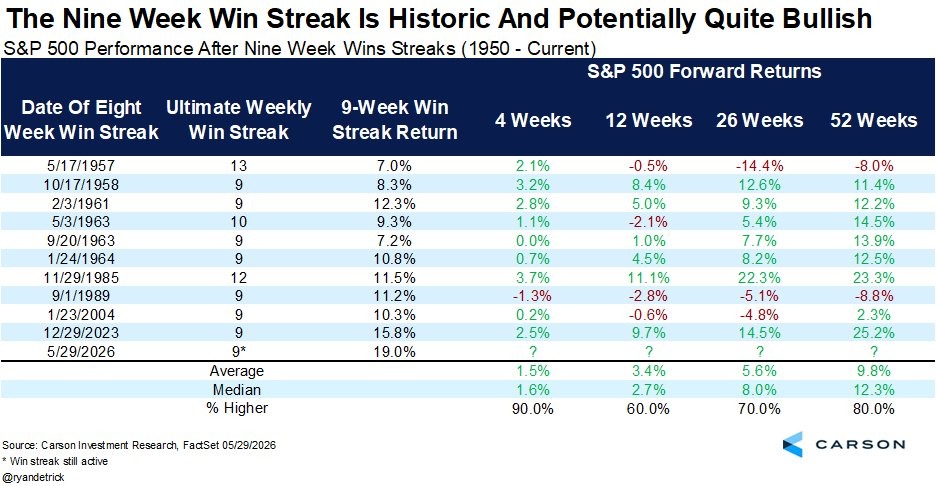
A lot has happened since my last newsletter article in March. The recent volatility over the last week makes it easy to forget that the market hit an all-time high on June 2 after nine up weeks in a row. However, despite that, consumer sentiment is at its lowest level going all the way back to the early 1950s.
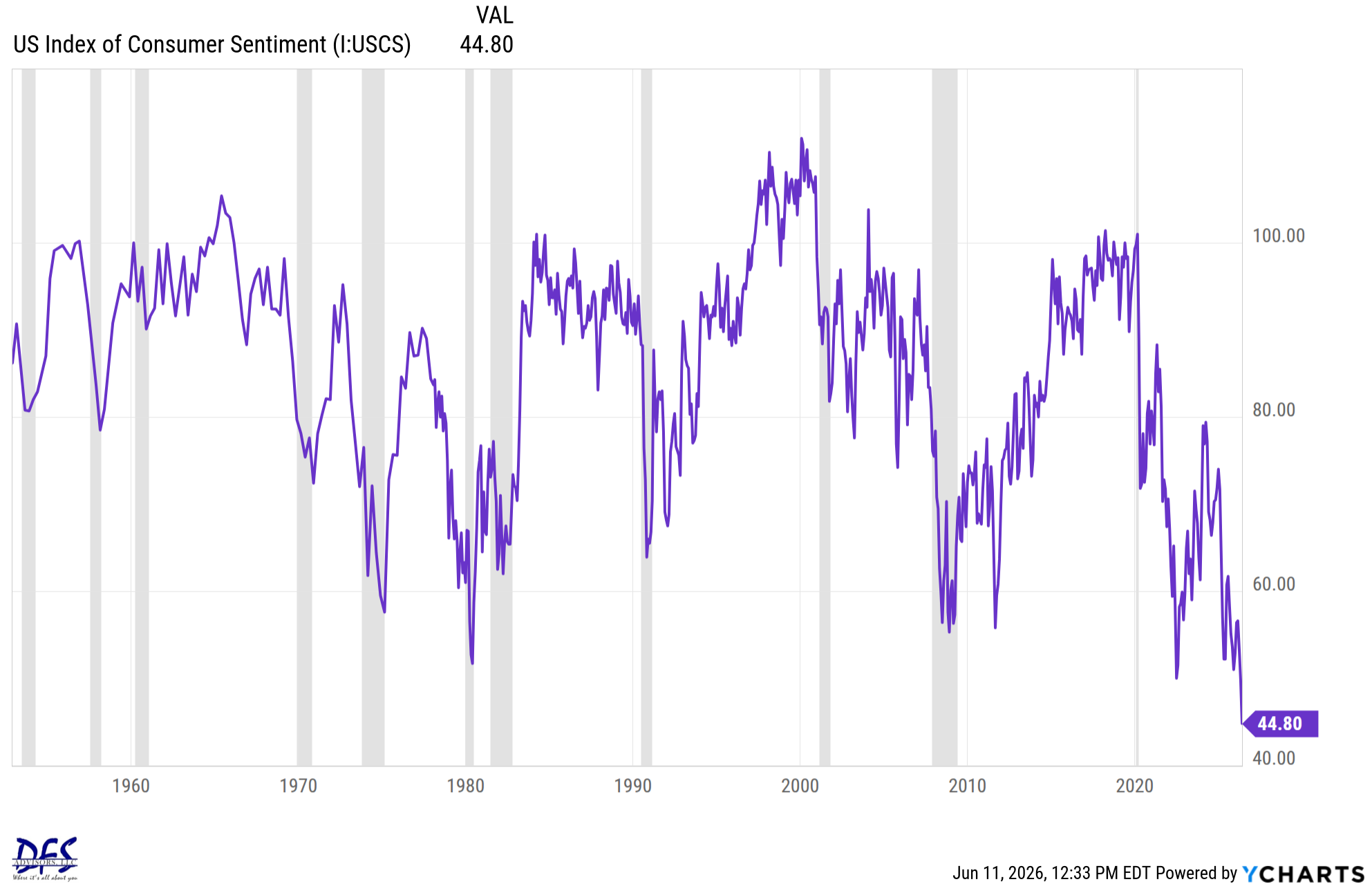
Think about all the reasons to be negative over the last 75 years – wars, recessions, high inflation, etc. Currently, investment accounts have been doing well, inflation is higher than target but not what it was a few years ago or in the 1970s, gas prices are higher but nowhere near recent or all-time (inflation adjusted) highs, and the war we are in with Iran is not nearly as “hot” as previous wars. But consumer sentiment is down the drain.
This is where the term “hated bull market” comes from. Stock prices rise despite low consumer sentiment with people preoccupied around all the reasons why the market should be lower. And honestly, those reasons may yet still cause volatility as we’ve seen over the last week or so. Some of those reasons include:
- War in Iran: This is the elephant in the room. We’ve had a tenuous ceasefire over the last few months – sometimes hot, sometimes cold. The market has been hopeful that they will get a more permanent solution in place, but so far they have not and things seem to have gotten worse over the last week. Unfortunately, the war there has led to…
- Inflationary pressures: I never thought I’d focus so much on Middle East geography, but here we are. With the Strait of Hormuz blockaded, input costs for companies have gone up. We hear a lot about oil and gas, but other goods such as fertilizer, methanol, aluminum, sulfur, and graphite pass through as well. So, recent inflation readings were at 4.2% annualized which is the highest in three years. High inflation seems to have increased the likelihood that the Federal Reserve will not lower rates as expected – maybe even raise rates – to help with their inflation control mandate.
- Mid-term election year: we talked about this almost four years ago so I won’t belabor the point. The bad news is that the mid-term election year tends to be weaker and more volatile, especially where we are mid-year. But the good news is that the following year tends to be stronger.
- SpaceX / Open AI / Anthropic IPOs: I’ve seen suggestions that the IPOs have caused selling pressure as people take profits in other companies to have funds available to buy the IPOs when it goes public. There is likely some validity to the argument, but the size of the offerings are relatively small compared to the overall market so they should be able to be absorbed relatively easily.
In general, earnings over the last quarter were good and supportive of the recent valuations. But the market is the collective buy/sell decisions of people with all their hopes, dreams, fears, and biases affecting those decisions. Because of that and the rare nine week bull run, the market may be volatile short term.
But, as the following chart shows, a nine week positive streak can bode well for market returns over the next year. That is why we don’t try to time the market and stick to our plan.
Content in this material is for informational purposes only and not intended to provide specific advice for recommendations for any individual. All performance referenced is historical and is no guarantee future results. All indices are unmanaged and may not be invested into directly.
The Standard & Poor's 500 Index is a capitalization weighed index of 500 stocks designed to measure performance of the broad domestic economy through changes in the aggregate market value of 500 stocks representing all major industries. The NASDAQ Composite Index measures all NASDAQ domestic and non-U.S. based common stocks listed on The NASDAQ Stock Market.
The economic forecasts set forth may not develop as predicted and there can be no guarantee that strategies promoted will be successful.
Stock investing includes risks, including fluctuating prices and loss of principal.