

Market Timing: Why We Avoid It
By: Aaron Anderson, CFP®, CFA, Managing Partner
June 23, 2025
There was a TV show I used to watch in the late 90s called Early Edition.[1]

The premise of the show is that the protagonist, Gary, who ironically is a stockbroker, receives tomorrow’s newspaper each morning. Episodes revolve around him using that foreknowledge for good to try to prevent tragedies. His friend is a schemer who tries to use the newspaper to make money.
Anyone who does forecasting knows it would be much easier if we had tomorrow’s news today. Even then, when it comes to the stock market, you would need to know a second piece of information: how the market will react to the news. We saw this interesting dynamic play out over the last quarter.
On April 2nd, almost immediately after I had published my previous article discussing the issue around the unpredictability of tariffs, we were greeted by the following chart during a press conference at the White House [2]:
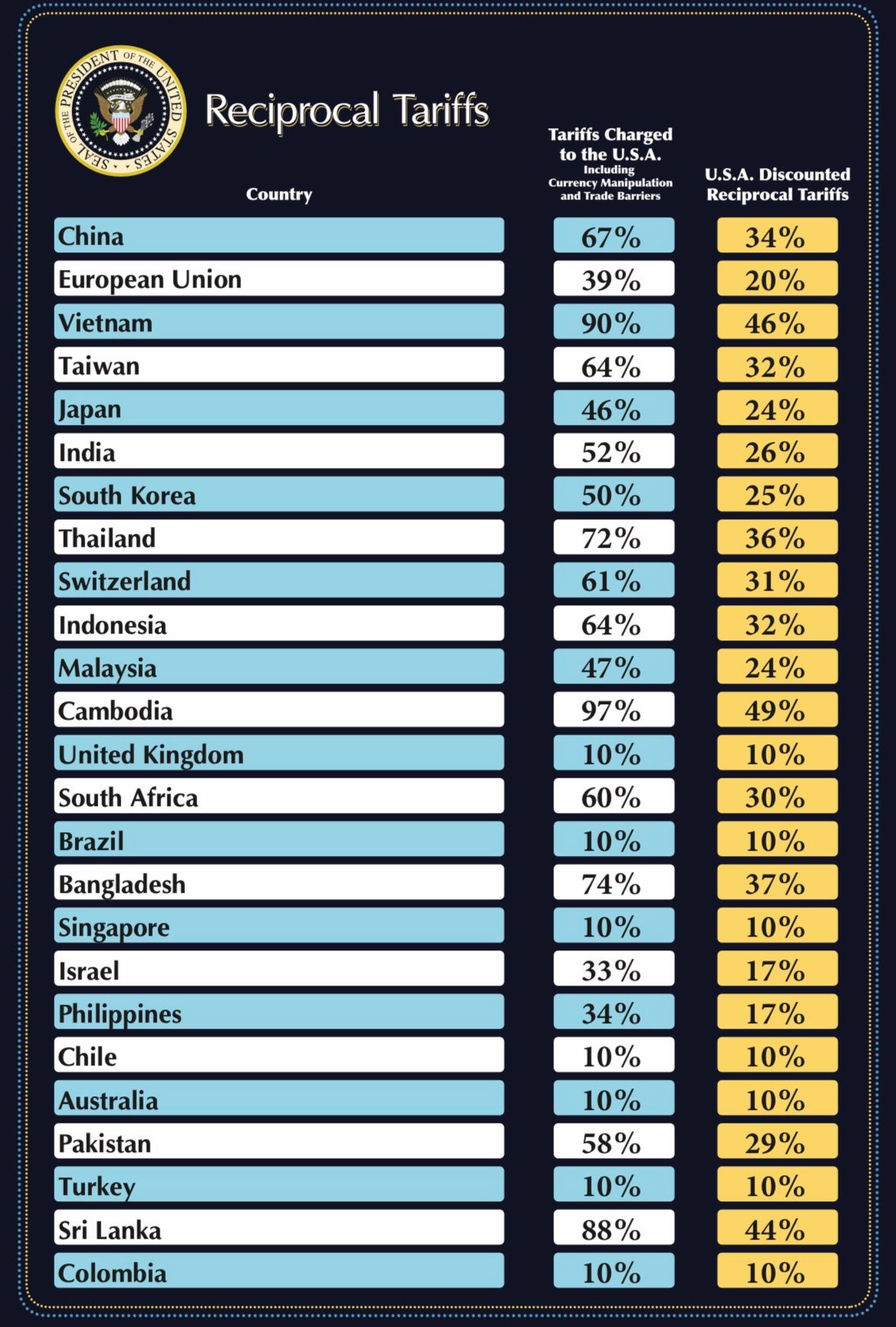
While many economists argued over the accuracy of the calculated numbers, they were far higher than most would have expected. Whether a company pays the tariffs or the tariffs are passed along to consumers, tariffs are disruptive to the economy, profits, and stock prices, at least in the short term. The market swooned that day.
Very few suspected that a week later, the president would announce a 90-day pause on most of those tariff hikes. The market loved it – April 9th was the best single day increase in decades.
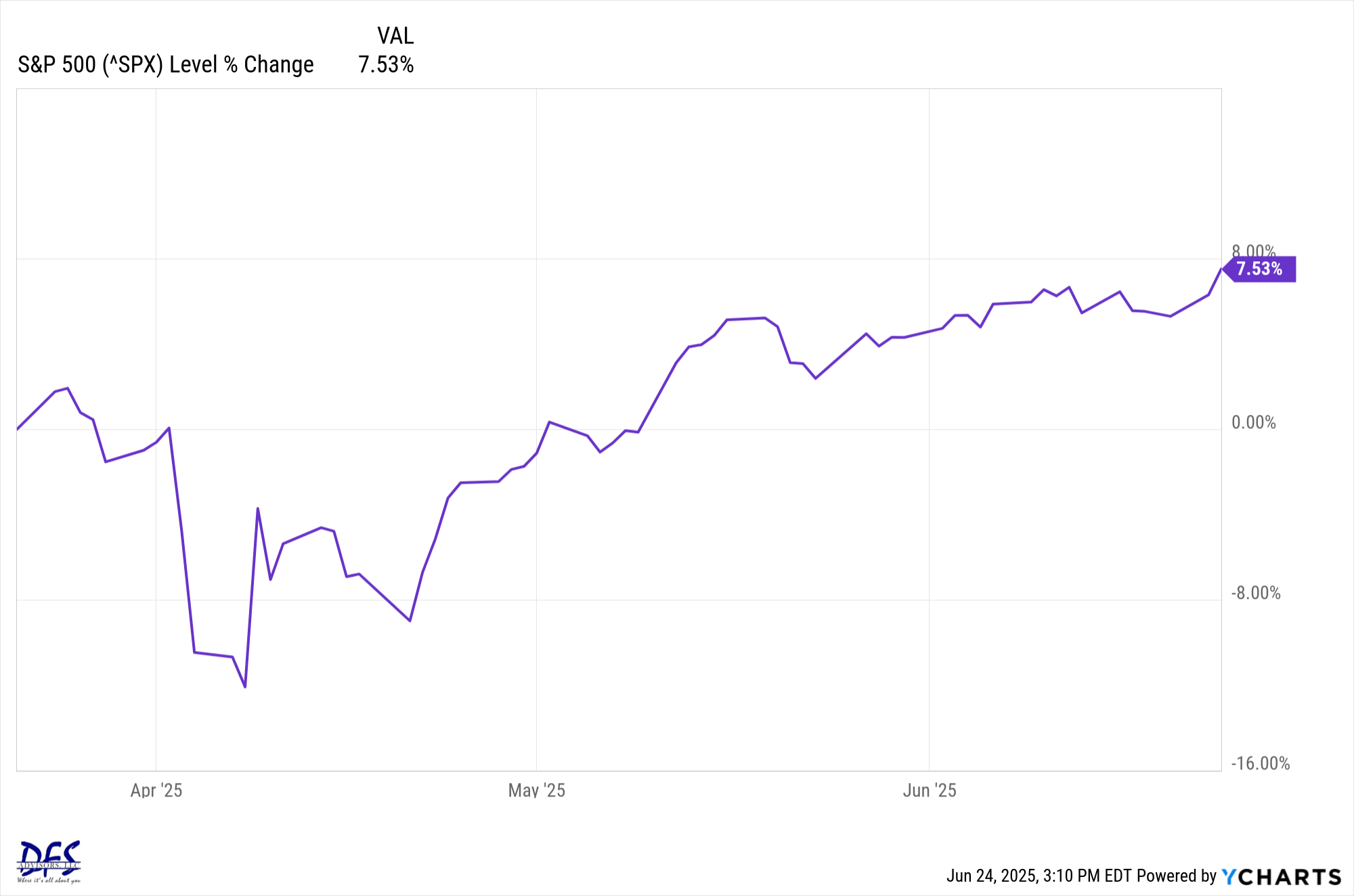
Since then, the market “melted up” and is close to reaching new highs. The market had flattened out in June with Israel and Iran exchanging missile fire as investors tried to figure out what that meant for the world economy. All reasonable outcomes to events in the news.
Over this past weekend, the US briefly joined the conflict to use technology only our military possesses to attack underground nuclear sites. I fully expected to come into the office this morning to a heavily down market. Consumers and investors dislike the instability that a war could bring with supply chain disruptions, decreased consumer confidence, and higher business risk.
Surprisingly, the market closed up today! In hindsight, one could argue that the market was relieved it was only a limited engagement, the US likely wasn’t being dragged in deeper, and the show of force was enough to encourage a ceasefire.
The thing is, we can always come up with a reason afterward as to why the market behaved as it did. Most of the time, we think it seems obvious when looking back. How could I not see it at the time?!? But while the news is breaking, it isn’t so obvious.
Even simple ideas like selling when the market is high can work against you. As you can see from this chart, the market frequently makes new all-time highs each year.
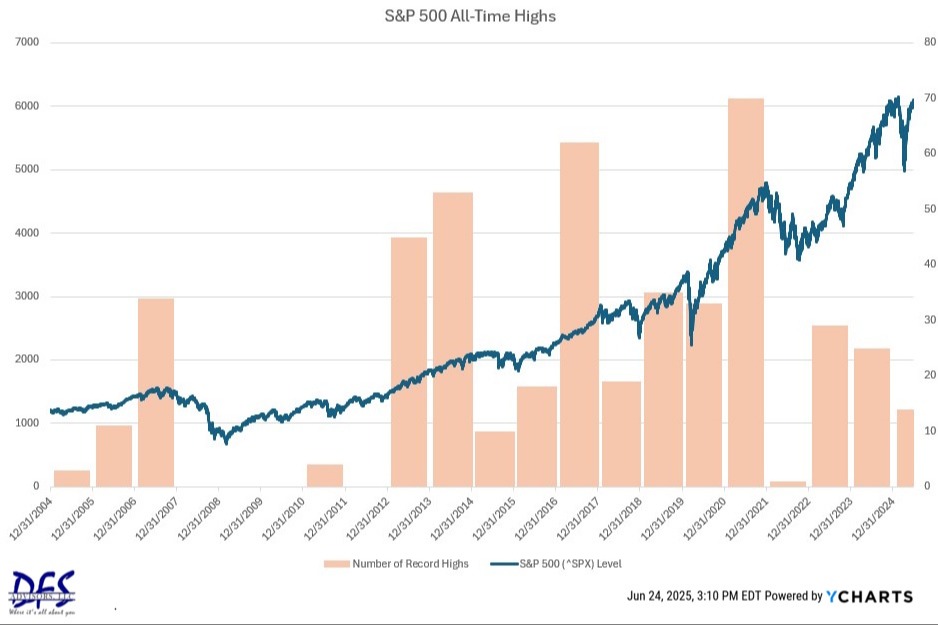
Say you sold at one of the 45 highs in 2013, maybe when the market was near the highs before the Great Financial Crisis in 2008. You’d have likely missed the next decade of gains. Say you were really lucky and sold at the high near the end of 2021. Unless you then bravely bought back in as the market was falling in 2022, you would have missed the last few great years as evidenced by the all-time highs we reached in February.
The 90-day tariff pause is almost over. Should we sell now? What if a deal is made or the pause is extended? When do we buy back in? There’s always something to be afraid of so if we wait until we feel comfortable, the answer might be never.
That’s why we don’t try to time the market and why we recommend clients don’t do so either. We try to create portfolios that are designed to allow us to stay invested through ever-changing market conditions. One of the reasons we picked the nautical imagery for our website is because we don’t change directions when issues arise, but we do “trim the sails” to make small adjustments to weather the storm.
On a quick side note, I’d like to let you know that our first webinar series on Roth conversions was a big success – even bigger than we expected. Thank you to all who attended! If you missed it, please feel free to watch the recording below. We chose the topic due to client questions and interest around the subject, so if you have anything you would like to learn about through a webinar with us, please feel free to send along your suggestions.
[1] Yes, I am aware I use a lot of pop culture references in my articles, but they fit so well!
[2] As with my last article, please do not read into this politically. It’s difficult to discuss the results of government policy without it unintentionally coming across as support or criticism of the politicians who implement them.
Content in this material is for informational purposes only and not intended to provide specific advice for recommendations for any individual. All performance referenced is historical and is no guarantee future results. All indices are unmanaged and may not be invested into directly.
The Standard & Poor's 500 Index is a capitalization weighed index of 500 stocks designed to measure performance of the broad domestic economy through changes in the aggregate market value of 500 stocks representing all major industries.
The economic forecasts set forth may not develop as predicted and there can be no guarantee that strategies promoted will be successful.
Stock investing includes risks, including fluctuating prices and loss of principal.